Growing up in Ajmer, Rajasthan, a historic cradle of interfaith harmony, I learned early on that true empathy begins with open-minded questioning. Conventional school education often stifles this instinct by prioritizing rote compliance. True learning thrives on active exploration, a philosophy mirrored in the ancient debate traditions of Nalanda University. In this great monastic university, a standing Challenger posed a complex riddle, physically slamming their hands together in a thunderous clap to launch a question at a seated Defender. The defender was then forced by strict logic to respond only with “I accept,” “The reason is not established,” or “There is no pervasion.” This rigorous cross-examination was designed entirely to smash intellectual complacency and uncover truth.
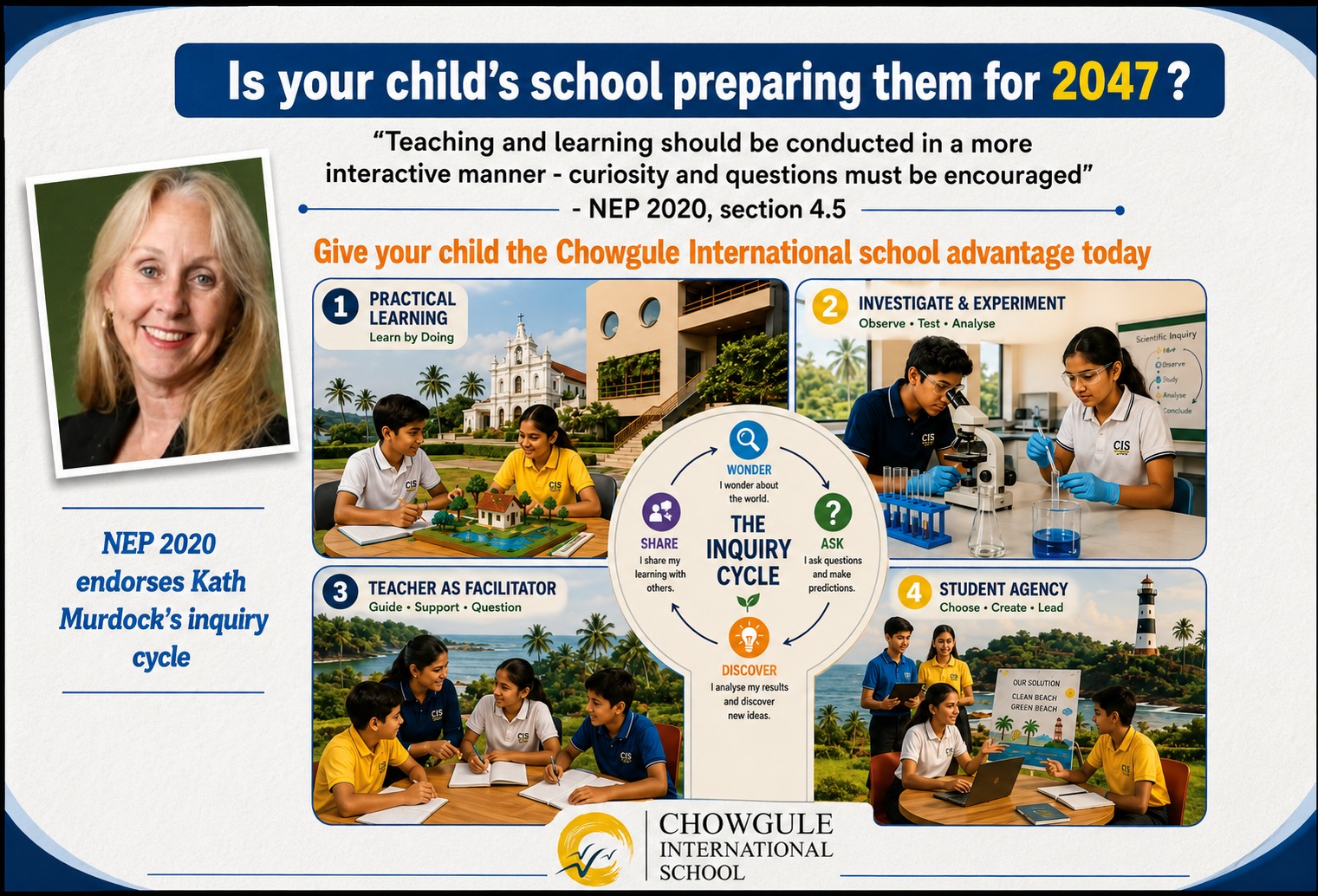
Kath Murdoch’s celebrated inquiry cycle channels this exact style of systematic curiosity into modern classrooms. By moving students from initial wonder to self-directed research, her model transforms learning into a profound human journey. This active investigation naturally fosters radical empathy. When children use inquiry to deeply understand the lived experiences of others, they stop seeing global issues as abstract concepts. Instead, they develop the emotional investment necessary to actively solve challenges related to the UN Sustainable Development Goals.
At Chowgule International School in South Goa, we put this inquisitive spirit at the absolute center of our classrooms. Aligned with the visionary recommendations of the NEP, we nurture structured inquiry from Nursery all the way to Grade 12. Through the Chowgule Citizen Charter we leverage inquiry to fine-tune radical empathy within the classroom and beyond.
Abhay Mathur
Goa